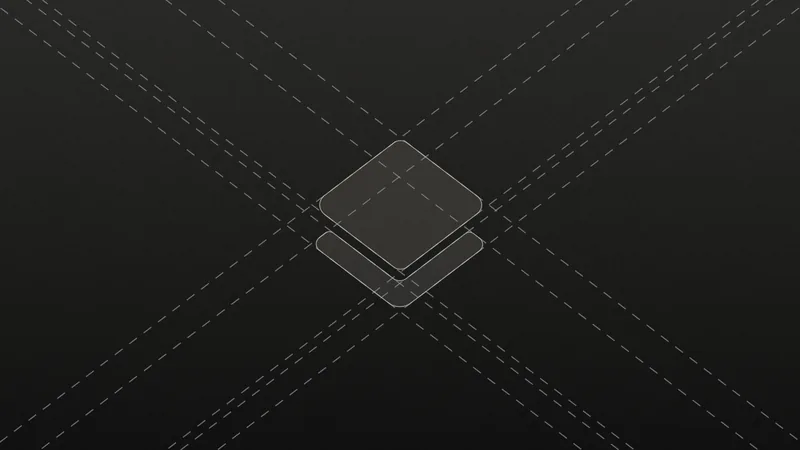
Tap to drop the tile when its lines meet the tower’s.
Strates
Ce qui s’empile se souvient de sa place.
WebGPU & WGSL through vgpu · box3d.js physics · Web Audio, contacts and a quiet pulse on the glide · TypeScript · Vite
Aplomb: a glass tile glides back and forth above a tower, along one edge of the drawing then the other. Tap, or press Space or Enter, to drop it. Its construction lines and axes are drawn at the tower's top, so when they meet the top tile's it is in line and settles square; off line, it overhangs and may tip. Nine levels, then a free plate: squares, an overhang, halves, triangles, discs, the chevron's hole, a column that must stay plumb, a recovery from a lean, and all three readings together. The tower stays when a level is cleared. A drop that holds but misses what the level asked is lifted and replayed. A tile that holds earns ten points, one set down in line twenty-five, plus ten for each further tile of a streak, and a hundred more every fifth; an overhang scores by how far it hangs; a level cleared earns a hundred. On the easy setting a tile may lean or slip down the side as long as it stays on the tower; on the hard setting every tile must land level on the top. Either way, a tile reaching the board ends the run. Drag the board to turn it; arrow keys turn, and down reaches a side view of the stack. Home recenters, G hides the lines, O makes the layers opaque or glass again. Escape restores the interface.
Setting the tower…